Introduction
Understanding Atomic Structure is an important part of ICSE Class 8 Chemistry. This chapter introduces students to atoms, molecules, atomic symbols, mass number, atomic number, isotopes, and related concepts. In this article, you will get ICSE Class 8 Chemistry Chapter 4 Atomic Structure Selina Solutions with simple explanations to help students prepare for school exams and improve conceptual knowledge.
Whether you are revising the chapter or looking for solved questions, these notes and solutions will make learning easier.
Study Support by Rohit Academy
Rohit Academy offers expert-curated ICSE Class 8 Chemistry Study Materials including ICSE Atomic Structure Selina Solutions, diagrams, and key formulas for better understanding.
You can also visit :
| ☛ ICSE Class 8 Chemistry Chapter 4: Atomic Structure Notes |
| ☛ ICSE Class 8 Physics |
| ☛ ICSE Class 8 Chemistry |
| ☛ ICSE Class 8 Mathematics |
| ☛ ICSE Class 8 Biology |
(A) Objective Type Questions
Question 1
Choose the correct answer from the multiple choices given below.
Question 1(i)
The smallest particle of matter exhibiting all its properties is :
(a) a radical (b) an atom
(c) a molecule (d) an electron
Answer:
(b) an atom
Explanation:
The atom is the smallest particle that exhibits all the properties of a particular element.
Question 1(ii)
Rutherford’s alpha-particle scattering experiment led to the discovery of:
(a) electron (b) proton
(c) neutron (d) nucleus
Answer:
(d) nucleus
Explanation:
The E. Rutherford gold foil experiment showed that most of the atom is empty space and that a small, dense, positively charged nucleus exists at the center.
Question 1(iii)
The outermost shell of an atom is known as:
(a) valency (b) valence electrons
(c) nucleus (d) valence shell
Answer:
(d) valence shell
Explanation:
The outermost electron shell of an atom is called the valence shell.
Electrons present in this shell participate in chemical bonding.
Question 1(iv)
The number of valence electrons present in magnesium is :
(a) two (b) three
(c) four (d) five
Answer:
(a) two
Explanation:
Magnesium electronic configuration: 2, 8, 2
The last shell has 2 electrons, so magnesium has 2 valence electrons.
Question 1(v)
The subatomic particle with positive charge is:
(a) proton (b) neutron
(c) electron (d) nucleon
Answer:
(a) proton
Explanation:
- Proton → positive charge (+)
- Electron → negative charge (–)
- Neutron → no charge
Question 1(vi)
If the atomic number of an atom is 17 and mass number is 35, then number of neutrons will be:
(a) 35 (b) 17
(c) 18 (d) 52
Answer:
(c) 18
Explanation:
Neutrons = Mass number − Atomic number
35 − 17 = 18
So the atom has 18 neutrons.
Question 1(vii)
The number of electrons in an atom is equal to the number of :
(a) protons in a neutral atom
(b) neutrons in a neutral atom
(c) nucleons in a neutral atom
(d) none of the above
Answer:
(a) protons in a neutral atom
Explanation:
In a neutral atom, the number of protons = number of electrons.
This keeps the atom electrically neutral.
Question 1(viii)
The sum of number of protons and number of neutrons present in the nucleus of an atom is called its :
(a) mass number (b) atomic number
(c) valency (d) none of these
Answer:
(a) mass number
Explanation:
Mass number = Protons + Neutrons
It represents the total particles present in the nucleus.
Question 1(ix)
The correct electronic configuration of sodium is:
(a) 2, 8, 1 (b) 1, 2, 8
(c) 8, 2, 1 (d) 8, 1, 2
Answer:
(a) 2, 8, 1
Explanation:
Sodium atomic number = 11
Electrons distribute in shells as:
- K shell = 2
- L shell = 8
- M shell = 1
So configuration = 2, 8, 1
Assertion Reason Type
Question 2
The following questions are Assertion-Reason based questions. Choose the answer based on the codes given below.
Question 2(i)
Assertion (A): Matter consists of very small particles called atoms.
Reason (R): Atoms are indivisible.
(a) Both A and R are true and R is the correct explanation of A.
(b) Both A and R are true but R is not the correct explanation of A.
(c) A is true but R is false.
(d) A is false but R is true.
Answer:
(c) A is true but R is false.
Explanation:
- Matter is made of very small particles called atoms, so A is true.
- But atoms are not indivisible because they contain protons, neutrons, and electrons, so R is false.
Question 2(ii)
Assertion (A): An atom is electrically neutral.
Reason (R): The number of protons and the number of electrons are equal in an atom.
(a) Both A and R are true and R is the correct explanation of A.
(b) Both A and R are true but R is not the correct explanation of A.
(c) A is true but R is false.
(d) A is false but R is true.
Answer:
(a) Both A and R are true and R is the correct explanation of A.
Explanation:
- An atom is neutral because positive charge of protons = negative charge of electrons.
- Therefore, both statements are true, and R correctly explains A.
Question 2(iii)
Assertion (A): The nucleus of an atom is a centrally located mass containing protons only.
Reason (R): The nucleus of an atom is positively charged.
(a) Both A and R are true and R is the correct explanation of A.
(b) Both A and R are true but R is not the correct explanation of A.
(c) A is true but R is false.
(d) A is false but R is true.
Answer:
(d) A is false but R is true.
Explanation:
- The nucleus contains both protons and neutrons, not only protons → A is false.
- The nucleus is positively charged due to protons → R is true.
Question 2(iv)
Assertion (A): The sum of the number of protons and neutrons present in the nucleus of an atom of an element is called its mass number.
Reason (R): The number of protons in the nucleus of an atom of an element is called its atomic number.
(a) Both A and R are true and R is the correct explanation of A.
(b) Both A and R are true but R is not the correct explanation of A.
(c) A is true but R is false.
(d) A is false but R is true.
Answer:
(b) Both A and R are true but R is not the correct explanation of A.
Explanation:
- Mass number = protons + neutrons, so A is true.
- Atomic number = number of protons, so R is also true.
- But R does not explain why mass number is the sum of protons and neutrons.
Question 2(v)
Assertion (A): The circular orbits surrounding the nucleus of an atom are also called as energy levels or shells.
Reason (R): These circular orbits are associated with a fixed amount of energy.
(a) Both A and R are true and R is the correct explanation of A.
(b) Both A and R are true but R is not the correct explanation of A.
(c) A is true but R is false.
(d) A is false but R is true.
Answer:
(a) Both A and R are true and R is the correct explanation of A.
Explanation:
According to the Niels Bohr atomic model, electrons move in fixed circular orbits around the nucleus.
Each orbit has a definite energy, so they are called energy levels or shells.
Fill in the blanks
(a) Dalton said that …………… could not be divided.
(b) The fundamental particle of an atom carrying a negative charge is called …………… .
(c) An ion which has a positive charge is called a …………… .
(d) The outermost shell of an atom is known as …………… .
(e) The …………… of an atom is very hard and dense.
(f) Neutrons are …………… particles having mass equal to that of protons.
(g) Isotopes are the atoms of …………… element having the …………… atomic number but …………… mass number.
Answer:
(a) Dalton said that atoms could not be divided.
(b) The fundamental particle of an atom carrying a negative charge is called electron.
(c) An ion which has a positive charge is called a cation.
(d) The outermost shell of an atom is known as the valence shell.
(e) The nucleus of an atom is very hard and dense.
(f) Neutrons are neutral particles having mass equal to that of protons.
(g) Isotopes are the atoms of the same element having the same atomic number but different mass number.
True or False
(a) An atom on the whole has a positive charge.
(b) The maximum number of electrons in the first shell can be 8.
(c) The central part of an atom is called nucleus.
(d) The cathode rays in the discharge tube consist of protons.
(e) The neutrons are neutral and have a mass equal to 1 amu.
Answer:
(a) False
Correct statement : An atom on the whole is electrically neutral.
(b) False
Correct statement : The maximum number of electrons in the first shell can be 2.
(c) True
(d) False
Correct statement : The cathode rays in the discharge tube consist of electrons.
(e) True
Match the following
Question 5
Match the following:
| Column A | Column B |
| (a) John Dalton | (i) Electronic configuration |
| (b) J.J. Thomson | (ii) Discovery of nucleus |
| (c) Maharishi Kannada | (iii) Atomic theory |
| (d) James Chadwick | (iv) Plum-pudding atomic model |
| (e) Ernest Rutherford | (v) Paramanus |
| (f) Neil Bohr | (vi) Neutrons |
Answer:
| Column A | Column B |
| (a) John Dalton | (iii) Atomic theory |
| (b) J.J. Thomson | (iv) Plum-pudding atomic model |
| (c) Maharishi Kannada | (v) Paramanus |
| (d) James Chadwick | (vi) Neutrons |
| (e) Ernest Rutherford | (ii) Discovery of nucleus |
| (f) Neil Bohr | (i) Electronic configuration |
Question 6
Name the following:
(a) The sub-atomic particle with negative charge and negligible mass.
(b) Protons and neutrons present in the nucleus.
(c) The electrons present in the outermost shell.
(d) Arrangement of electrons in the shells of an atom.
(e) The number of protons present in the nucleus of an atom.
(f) The sum of the number of protons and neutrons of an atom.
(g) Atoms of same element with same atomic number but a different mass number.
(h) The smallest unit of an element which takes part in a chemical reaction.
(i) The particle which is not present in an atom of hydrogen.
Answer:
(a) Electrons
(b) Nucleons
(c) Valence electrons
(d) Electronic configuration
(e) Atomic number
(f) Mass number
(g) Isotopes
(h) Atoms
(i) Neutron
(B) Short Answer Type Questions
Question 1
Define the following terms:
(a) Atomic number
(b) Mass number
(c) Nucleons
(d) Valence shell
Answer:
(a) Atomic number : The number of protons present in the nucleus of an atom is called the atomic number.
(b) Mass number : The total number of protons and neutrons present in the nucleus of an atom is called the mass number.
(c) Nucleons : Protons and neutrons together are called nucleons.
(d) Valence shell : The outermost electron shell of an atom is called the valence shell.
Question 2
Name three fundamental particles of an atom. Give their symbols with charge on each particle.
Answer:
| Particle | Symbol | Charge |
| Proton | p+ | +1 |
| Electron | e− | −1 |
| Neutron | n0 | 0 |
Question 3
Which fundamental particle is present in anode rays ? Why anode rays are also called as canal rays.
Answer:
The fundamental particle present in anode rays is the proton.
They are called canal rays because they pass through small holes (canals) in the cathode and move towards the cathode.
Question 4
What are cathode rays ? Which fundamental particle is present in these rays ?
Answer:
Cathode rays are streams of negatively charged particles emitted from the cathode in a discharge tube.
The fundamental particle present in cathode rays is the electron.
Question 5
The atom of an element is made up of 4 protons, 5 neutrons and 4 electrons. What is its atomic number and mass number ? Represent the atom with a symbol.
Answer:
- Atomic number = Number of protons = 4
- Mass number = Protons + Neutrons
= 4 + 5
= 9 - Symbol representation: \({}_4^9\mathrm{Be}\)
(This element is Beryllium.)
Question 6
The atomic number and the mass number of sodium are 11 and 23 respectively. What information is conveyed by this statement ?
Answer:
- Number of protons = 11
- Number of electrons = 11
- Number of neutrons = 23 − 11 = 12
Question 7
Differentiate between the following:
(a) protons and neutrons
(b) nucleons and nucleus
(c) atomic number and mass number
Answer:
(a) Protons and Neutrons:
| Protons | Neutrons |
| Protons carry a positive charge (+1). | Neutrons have no charge (neutral). |
| Protons determine the atomic number of an element. | Neutrons help determine the mass number of an element. |
(b) Nucleons and Nucleus:
| Nucleons | Nucleus |
| Protons and neutrons | Central part of atom |
| Particles inside nucleus | Contains nucleons |
(c) Atomic Number and Mass Number:
| Atomic Number | Mass Number |
| Atomic number [Z] is equal to the number of protons in the atom of an element. | Mass number [A] of an atom is the total number of protons and neutrons in the nucleus of an atom. |
Question 8
Why is Thomson’s Atomic model called as Plum Pudding model ?
Answer:
Thomson compared the atom to a plum pudding where:
- Electrons are like plums embedded in pudding
- Positive charge is spread throughout the atom
Therefore it is called the Plum Pudding Model.
(C) Long Answer Type Questions
Question 1
Mention briefly the salient features of Dalton’s atomic theory (five points).
Answer:
The salient features of Dalton’s atomic theory are:
- All matter is made up of very small particles called atoms.
- Atoms are indivisible and cannot be created or destroyed in a chemical reaction.
- All atoms of the same element are identical in mass and properties.
- Atoms of different elements have different masses and properties.
- Atoms combine in simple whole number ratios to form compounds.
Question 2
What are the observations of the alpha particle scattering experiment done by Rutherford in order to determine the structure of an atom ?
Answer:
Observations of Rutherford’s Alpha Particle Scattering Experiment:
- Most of the alpha particles passed straight through the gold foil without any deflection.
- Some alpha particles were deflected through small angles.
- A very few alpha particles were deflected through large angles.
- A very small number of alpha particles bounced back in the direction from which they came.
Question 3
(a) What are the two main features of Rutherford’s atomic model ?
(b) State its one drawback.
Answer:
(a) Two main features of Rutherford’s atomic model:
- The atom has a small, dense, positively charged nucleus at its centre containing most of the mass of the atom.
- Electrons revolve around the nucleus in circular paths, and most of the atom is empty space.
(b) One drawback:
According to this model, revolving electrons should lose energy and fall into the nucleus, so the atom should collapse. But in reality, atoms are stable.
Question 4
(a) According to the modern atomic model, what are the two main parts of which an atom is made of ?
(b) Where is the nucleus of an atom situated?
(c) What are energy levels or shells of an atom?
Answer:
(a) According to the modern atomic model, an atom consists of two main parts:
- Nucleus
- Extra nuclear part where electrons revolve.
(b) The nucleus is situated at the centre of the atom.
(c) Energy levels or shells are the fixed paths or regions around the nucleus in which electrons move. These shells are named K, L, M, N, etc.
Question 5
(a) State the rule according to which electrons are filled in various energy levels.
(b) Give the number of electrons that can be present in the first four shells of an atom using this rule.
(c) What is the maximum number of electrons present in the outermost (valence) shell ?
Answer:
(a) Electrons are filled in different shells according to the 2n2 rule, where n is the number of the shell.
(b) Number of electrons in the first four shells:
| Shell | Value of n | Maximum electrons (2n2) |
| K shell | 1 | 2 |
| L shell | 2 | 8 |
| M shell | 3 | 18 |
| N shell | 4 | 32 |
(c) The maximum number of electrons in the valence shell is 8.
Question 6
What are isotopes ? How does the existence of isotopes contradict Dalton’s atomic theory ?
Answer:
Isotopes are atoms of the same element having the same atomic number but different mass numbers.
Dalton stated that all atoms of the same element are identical in mass and properties.
However, isotopes of the same element have different masses, so this statement of Dalton’s atomic theory is not correct.
Question 7
What is valency ? Name two elements having variable valency and state their valencies.
Answer:
Valency is the combining capacity of an atom, i.e., the number of electrons an atom loses, gains, or shares during a chemical reaction.
Elements having variable valency:
- Iron (Fe): 2 and 3
- Copper (Cu): 1 and 2
Question 8
State the mass number, the atomic number, number of neutrons and electronic configuration of the following atoms.
(a) \({_6^{12}}C\)
(b) \({_8^{16}}O\)
(c) \({_9^{19}}F\)
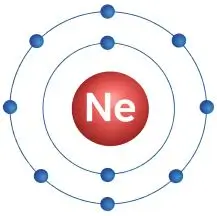
(d) \({_{10}^{20}}Ne\)
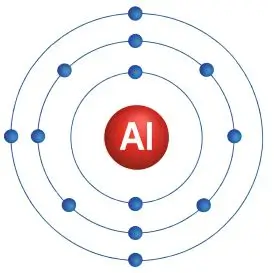
(e) \({_{13}^{27}}Al\)
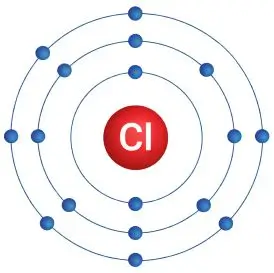
(f) \({_{17}^{35}}Cl\)
Also, draw atomic diagrams for each of them.
Answer:
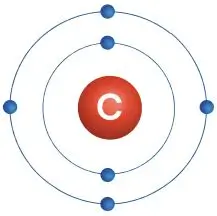
(a) \({_6^{12}}C\)
- Mass number: 12
- Atomic number: 6
- Number of neutrons: 12 − 6 = 6
- Electronic configuration: 2, 4
- Atomic diagram:
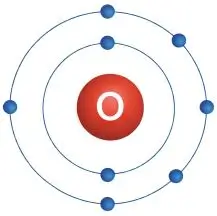
(b) \({_8^{16}}O\)
- Mass number: 16
- Atomic number: 8
- Number of neutrons: 16 − 8 = 8
- Electronic configuration: 2, 6
- Atomic diagram:
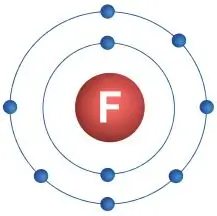
(c) \({_9^{19}}F\)
- Mass number: 19
- Atomic number: 9
- Number of neutrons: 19 − 9 = 10
- Electronic configuration: 2, 7
- Atomic diagram:
(d) \({_{10}^{20}}Ne\)
- Mass number: 20
- Atomic number: 10
- Number of neutrons: 20 − 10 = 10
- Electronic configuration: 2,8
- Atomic diagram:
(e) \({_{13}^{27}}Al\)
- Mass number: 27
- Atomic number: 13
- Number of neutrons: 27 − 13 = 14
- Electronic configuration: 2, 8, 3
- Atomic diagram:
(f) \({_{17}^{35}}Cl\)
- Mass number: 35
- Atomic number: 17
- Number of neutrons: 35 − 17 = 18
- Electronic configuration: 2, 8, 7
- Atomic diagram:
Question 9
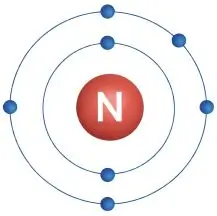
Draw the diagrams representing the atomic structures of the following :
[At. No. N = 7, Ne = 10]
(a) Nitrogen
(b) Neon
Answer:
(a) Atomic structure diagram of Nitrogen:
(b) Atomic structure diagram of Neon:
Question 10
Complete the table below by identifying A, B, C, D, E and F.
| Element | Symbol | Number of protons | Number of neutrons | Number of electrons |
| Fluorine | 9F19 | 9 | A | B |
| Aluminium | C | D | 14 | 13 |
| Potassium | 19K39 | E | F | 19 |
Answer:
| Element | Symbol | Number of protons | Number of neutrons | Number of electrons |
| Fluorine | 9F19 | 9 | 10 | 9 |
| Aluminium | 13Al27 | 13 | 14 | 13 |
| Potassium | 19K39 | 19 | 20 | 19 |
Download ICSE Class 8 Chemistry Chapter 4 Atomic Structure Selina Solutions PDF
Students looking for complete ICSE Class 8 Chemistry Chapter 4 Atomic Structure Selina Solutions PDF can use these notes for revision, homework, and exam preparation.
Practice all exercise questions regularly to score better marks in ICSE examinations.
Importance of Selina Solutions
Selina Solutions for ICSE Class 8 Chemistry Chapter 4 Atomic Structure help students by:
- Providing step-by-step answers
- Explaining concepts in simple language
- Improving exam preparation
- Helping in revision before tests
- Strengthening numerical problems and definitions
Conclusion
ICSE Class 8 Chemistry Chapter 4 Atomic Structure Selina Solutions provide detailed explanations of atoms, molecules, isotopes, isobars, atomic number, and mass number. These solutions help students understand concepts clearly and score better in examinations.
ICSE Class 8 Chemistry Selina Solutions
The Selina Concise Chemistry Class 8 book includes the following chapters:
Official Website:
Students can visit the official CISCE website for more details and updates.