Introduction
If you are searching for ICSE Class 8 Chemistry Chapter 6 Chemical Reactions Selina Solutions, this chapter explains how chemical changes occur, different types of reactions, catalysts, precipitation reactions, displacement reactions, neutralization, and balanced chemical equations. It is an important chapter for ICSE Class 8 exams and builds the foundation for higher chemistry concepts.
Study Support by Rohit Academy
Rohit Academy offers expert-curated ICSE Class 8 Chemistry Study Materials including ICSE Chemical Reactions Selina Solutions, diagrams, and key formulas for better understanding.
You can also visit:
| ☛ ICSE Class 8 Chemistry Chapter 6: Chemical Reactions Notes |
| ☛ ICSE Class 8 Physics |
| ☛ ICSE Class 8 Chemistry |
| ☛ ICSE Class 8 Mathematics |
| ☛ ICSE Class 8 Biology |
EXERCISE (I) – (A) Objective Type Questions
Question 1
Choose the correct answer from the multiple choices given below:
Question 1(i)
One of the characteristics of a chemical reaction is:
(a) Catalyst (b) Chemical bond
(c) Effervescence (d) Evolution of gas
Answer:
(d) Evolution of gas
Explanation:
A chemical reaction often shows visible changes like gas evolution, colour change, or heat/light production.
For example, when zinc reacts with dilute hydrochloric acid, hydrogen gas is evolved:
Zn + 2HCl → ZnCl2 + H2 ↑
Question 1(ii)
When potassium chlorate is heated, the gas evolved is:
(a) Hydrogen (b) Chlorine
(c) Oxygen (d) Nitrogen
Answer:
(c) Oxygen
Explanation:
On heating, potassium chlorate decomposes to form potassium chloride and oxygen gas:
2KClO3 \(\xrightarrow{heat}\) 2KCl + 3O2
Question 1(iii)
A solution of silver nitrate is added to a solution of sodium chloride. The colour of the precipitate formed is:
(a) Black (b) White
(c) Grey (d) Green
Answer:
(b) White
Explanation:
When silver nitrate reacts with sodium chloride, silver chloride (AgCl) is formed as a white precipitate:
AgNO3 + NaCl → AgCl ↓ + NaNO3
white ppt.
Question 1(iv)
Which of the following acts as a catalyst in the manufacture of ammonia gas from nitrogen and hydrogen?
(a) Manganese dioxide (b) Platinum
(c) Iron (d) Molybdenum
Answer:
(c) Iron
Explanation:
In the Haber’s process for manufacturing ammonia, iron (Fe) acts as a catalyst:
N2 + 3H2 → 2NH3
Question 1(v)
The process of photosynthesis takes place in the presence of:
(a) Electricity (b) Heat
(c) Light (d) Sound
Answer:
(c) Light
Explanation:
Photosynthesis requires sunlight for plants to make food:

EXERCISE (I) – (B) Short Answer Type Questions
Question 1
Define:
(a) Chemical reaction
(b) Catalyst
(c) Promoter
Answer:
(a) Chemical reaction: A chemical reaction is a process in which one or more substances (reactants) are changed into new substances (products) with different properties.
(b) Catalyst: A catalyst is a substance that increases the rate of a chemical reaction without itself being used up or chemically changed at the end of the reaction.
(c) Promoter: A promoter is a substance that increases the efficiency of a catalyst in a chemical reaction.
Question 2
What is a chemical bond?
Answer:
A chemical bond is a force of attraction that holds atoms together in a molecule or compound.
Question 3
What happens during a chemical reaction?
Answer:
During a chemical reaction, the atoms in the reactants rearrange to form new substances (products) with different properties. Chemical bonds are broken and new bonds are formed.
Question 4
Differentiate between reactants and products.
Answer:
Differences between reactants and products:
| Reactants | Product |
| Substances that take part in a chemical reaction. | Substances formed as a result of the reaction. |
| Reactants are written on the left hand side of the equation. | Products are written on the right hand side of the equation. |
| Example: In the reaction: H₂ + Cl₂ → 2HCl Reactants = H₂ and Cl₂ | Example: In the reaction: H₂ + Cl₂ → 2HCl Products = HCl |
Question 5
Name three biochemical catalysts (enzymes) found in the human body.
Answer:
Biochemical catalysts (enzymes) found in the human body:
- Amylase
- Pepsin
- Trypsin
Question 6
State two characteristics of chemical reactions.
Answer:
Two characteristics of chemical reaction are:
- Gas is produced
Example: Zinc reacting with dilute sulphuric acid releases hydrogen gas. - Colour changes
Example: Iron placed in blue copper sulphate solution turns it light green because a new substance (ferrous sulphate) forms.
Question 7
Complete and balance the following chemical equations:
(a) N2 + O2 →
(b) H2S + Cl2 →
(c) Na + H2O →
(d) NaCl + AgNO3 →
(e) Zn + H2SO4 (dil) →
(f) FeSO4 + NaOH →
(g) Pb(NO3)2
(h) BaCl2 + H2SO4 →
Answer:
(a) N₂ + O₂ → 2NO
(b) H₂S + Cl₂ → 2HCl + S
(c) 2Na + 2H₂O → 2NaOH + H₂
(d) NaCl + AgNO₃ → AgCl + NaNO₃
(e) Zn + H₂SO₄ (dil.) → ZnSO₄ + H₂
(f) FeSO₄ + 2NaOH → Fe(OH)₂ + Na₂SO₄
(g) 2Pb(NO₃)₂ 2PbO + 4NO₂ + O₂
(h) BaCl₂ + H₂SO₄ → BaSO₄ + 2HCl
EXERCISE (I) – (C) Long Answer Type Questions
Question 1
Illustrate the following characteristics of a chemical reaction by giving a suitable example of each:
(a) Evolution of a gas
(b) Change of colour
(c) Change of state
Answer:
(a) Evolution of a gas
When zinc reacts with dilute sulphuric acid, it forms zinc sulphate and releases hydrogen gas.

(b) Change of colour
When iron nail is placed in copper sulphate solution, the blue colour of the solution slowly turns green.

(c) Change of state
Ammonia and hydrogen chloride gases react to produce a white solid of ammonium chloride.

Question 2
What are positive and negative catalysts? Give one example of each.
Answer:
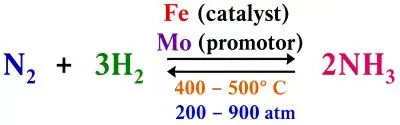
Positive Catalyst : When a catalyst increases the rate of a chemical reaction, it is known as a positive catalyst.
For example, Finely divided iron is used as a positive catalyst in the manufacture of ammonia from hydrogen and oxygen.
Negative Catalyst: When a catalyst decreases the rate of a chemical reaction, it is known as a negative catalyst.
For example, Phosphoric acid acts as a negative catalyst to decrease the rate of decomposition of hydrogen peroxide.
Question 3
What do you observe when:
(a) Dilute sulphuric acid is added to granulated zinc?
(b) A few pieces of iron are dropped in a blue solution of copper sulphate?
(c) Silver nitrate is added to a solution of sodium chloride?
(d) Ferrous sulphate solution is added to an aqueous solution of sodium hydroxide?
(e) Solid lead nitrate is heated?
(f) Dilute sulphuric acid is added to barium chloride solution?
Answer:
(a) When dilute sulphuric acid is added to granulated zinc, hydrogen gas is evolved with an effervescence.
(b) When a few pieces of iron are dropped into a blue coloured copper sulphate solution, the blue colour of the solution fades and turns into light green.
(c) When a solution of silver nitrate is added to a solution of sodium chloride a white insoluble precipitate of silver chloride is formed.

(d) When ferrous sulphate solution is added to sodium hydroxide solution, a dirty green precipitate of ferrous hydroxide is formed.

(e) When solid lead nitrate is heated strongly, it decomposes to produce light yellow solid lead monoxide, reddish brown nitrogen dioxide gas and colourless oxygen gas.

(f) When dilute sulphuric acid is added to barium chloride solution, a white precipitate of barium sulphate is formed.

Question 4
State the conditions required for the following reactions to occur:
(a) Decomposition of water into hydrogen and oxygen.
(b) Formation of iron sulphide from iron and sulphur.
(c) Reaction between zinc and dilute hydrochloric acid to produce hydrogen gas.
(d) Decomposition of potassium chlorate into potassium chloride and oxygen.
Answer:
(a) Requires passing electric current through water (electrolysis).
(b) Requires heating a mixture of iron filings and sulphur powder.
(c) Takes place at room temperature (no special condition needed).
(d) Requires heating, often in the presence of manganese dioxide (MnO₂) as a catalyst.
EXERCISE (II) – (A) Objective Type Questions
Question 1
Choose the correct answer from the multiple choices given below.
Question 1(i)
Burning of a metal in air represents a:
(a) Combination reaction
(b) Displacement reaction
(c) Decomposition reaction
(d) Double displacement reaction
Answer:
(a) Combination reaction
Explanation:
Burning a metal in air forms a metal oxide, which is a single compound formed from two reactants (metal and oxygen), i.e., a combination reaction.
Question 1(ii)
Which of the following reactions is a neutralization reaction?
(a) When zinc reacts with dilute HCl
(b) Reaction between barium chloride solution and dilute H₂SO₄
(c) When carbon burns in air
(d) Sodium hydroxide reacts with dilute H₂SO₄
Answer:
(d) Sodium hydroxide reacts with dilute H₂SO₄
Explanation:
Neutralization is the reaction between an acid and a base to form salt and water. Sodium hydroxide (base) with sulphuric acid (acid) forms sodium sulphate and water.
Question 1(iii)
Which of the following oxides produces salt upon reacting with sodium hydroxide?
(a) Na₂O (b) CaO
(c) CO₂ (d) ZnO
Answer:
(c) CO₂
Explanation:
CO₂ is an acidic oxide. When it reacts with sodium hydroxide, it forms sodium carbonate (a salt):
CO2 + 2NaOH → Na2CO3 + H2O
Question 1(iv)
The acidic gas produced when lead nitrate is heated is:
(a) PbO (b) NO₂
(c) MgO (d) N₂O
Answer:
(b) NO₂
Explanation:
Lead nitrate decomposes on heating to form lead oxide, nitrogen dioxide (NO₂, an acidic gas), and oxygen:
2Pb(NO3)2 → 2PbO + 4NO2 + O2
Question 1(v)
The gas produced when iron metal reacts with dilute hydrochloric acid is:
(a) Oxygen (b) Hydrogen
(c) Chlorine (d) Water vapour
Answer:
(b) Hydrogen
Explanation:
Iron reacts with hydrochloric acid to produce iron chloride and hydrogen gas:
Fe + 2HCl → FeCl2 + H2
Question 1(vi)
When copper metal is added to a solution of silver nitrate, the solution changes to blue. This shows:
(a) Copper is less reactive than silver
(b) Copper is more reactive than silver
(c) Both are equally reactive
(d) None of the above
Answer:
(b) Copper is more reactive than silver
Explanation:
Copper displaces silver from silver nitrate, forming copper nitrate (blue solution) and silver metal. This displacement confirms copper’s greater reactivity.
Question 1(vii)
Which of the following equations represents an endothermic reaction?
(a) C + O₂ \(\xrightarrow{heat}\) CO₂
(b) CaO + H₂O → Ca(OH)₂
(c) NaOH + HCl → NaCl + H₂O
(d) CaCO₃ \(\xrightarrow{heat}\) CaO + CO₂
Answer:
(d) CaCO₃ \(\xrightarrow{heat}\)
CaO + CO₂
Explanation:
The decomposition of calcium carbonate requires heat (endothermic process) to produce calcium oxide and carbon dioxide.
EXERCISE (II) – Assertion Reason Type
Question 2(i)
Assertion (A): A chemical reaction is a process which involves the transformation of one or more substances into new substances with entirely different properties.
Reason (R): Breaking of chemical bonds between reacting substances takes place to form new bonds forming new substances called products.
(a) Both A and R are true and R is the correct explanation of A.
(b) Both A and R are true but R is not the correct explanation of A.
(c) A is true but R is false.
(d) A is false but R is true.
Answer:
(a) Both A and R are true and R is the correct explanation of A.
Explanation:
The definition of a chemical reaction is correct, and the reason accurately explains that the transformation involves breaking old chemical bonds and forming new ones, producing products with different properties.
Question 2(ii)
Assertion (A): A chemical equation must be balanced in order to follow the law of conservation of mass.
Reason (R): A chemical equation called a skeletal equation may not have equal numbers of atoms of each element in reactants and products.
(a) Both A and R are true and R is the correct explanation of A.
(b) Both A and R are true but R is not the correct explanation of A.
(c) A is true but R is false.
(d) A is false but R is true.
Answer:
(a) Both A and R are true and R is the correct explanation of A.
Explanation:
A chemical equation must be balanced because the total mass of the reactants must be equal to the total mass of the products. This follows the law of conservation of mass. During a chemical reaction, atoms are neither created nor destroyed, so the number of atoms of each element must be the same before and after the reaction. Balancing a chemical equation ensures this requirement is met, which is why the law is satisfied.
Question 2(iii)
Assertion (A): The reaction of an acid with a base to produce salt and water is called a neutralisation reaction.
Reason (R): Neutralisation reaction is a double displacement reaction.
(a) Both A and R are true and R is the correct explanation of A.
(b) Both A and R are true but R is not the correct explanation of A.
(c) A is true but R is false.
(d) A is false but R is true.
Answer:
(a) Both A and R are true and R is the correct explanation of A.
Explanation:
Neutralisation is an acid–base reaction that forms salt and water. It is considered a type of double displacement reaction.
Question 2(iv)
Assertion (A): When a copper coil is dipped in an aqueous solution of silver nitrate, the colour of the solution slowly changes from colourless to blue.
Reason (R): Silver metal is more reactive than copper.
(a) Both A and R are true and R is the correct explanation of A.
(b) Both A and R are true but R is not the correct explanation of A.
(c) A is true but R is false.
(d) A is false but R is true.
Answer:
(c) A is true but R is false.
Explanation:
The solution turns blue because copper displaces silver from silver nitrate. This shows copper is more reactive than silver, not the other way around. So, the reason is incorrect.
Question 2(v)
Assertion (A): When energy is absorbed during a chemical reaction, it is said to be an exothermic reaction.
Reason (R): A rise in temperature takes place during an exothermic reaction.
(a) Both A and R are true and R is the correct explanation of A.
(b) Both A and R are true but R is not the correct explanation of A.
(c) A is true but R is false.
(d) A is false but R is true.
Answer:
(d) A is false but R is true.
Explanation:
Absorption of energy describes an endothermic reaction, not exothermic, so A is false. In an exothermic reaction, energy is released, usually causing a rise in temperature, so R is true.
EXERCISE (II) – Fill in the blanks
Question 3
Fill in the blanks:
(a) A reaction in which two or more substances combine to form a single substance is called a …………… reaction.
(b) A …………… is a substance which changes the rate of a chemical reaction without undergoing a chemical change itself.
(c) The formation of gas bubbles in a liquid during a reaction is called …………… .
(d) The reaction between an acid and a base is called …………… .
(e) Soluble bases are called …………… .
(f) The chemical change involving iron and hydrochloric acid illustrates a …………… reaction.
(g) In the type of reaction called …………… two compounds exchange their positive an negative radicals respectively.
(h) A catalyst either …………… or …………… the rate of a chemical change but itself remains …………… at the end of the reaction.
(i) The chemical reaction between hydrogen and chlorine is a …………… reaction.
(j) When a piece of copper is added to silver nitrate solution, it turns …………… in colour.
Answer:
(a) A reaction in which two or more substances combine to form a single substance is called a combination reaction.
(b) A catalyst is a substance which changes the rate of a chemical reaction without undergoing a chemical change itself.
(c) The formation of gas bubbles in a liquid during a reaction is called effervescence.
(d) The reaction between an acid and a base is called neutralization reaction.
(e) Soluble bases are called alkalis.
(f) The chemical change involving iron and hydrochloric acid illustrates a displacement reaction.
(g) In the type of reaction called double displacement, two compounds exchange their positive and negative radicals respectively.
(h) A catalyst either increases or decreases the rate of a chemical change but itself remains unchanged at the end of the reaction.
(i) The chemical reaction between hydrogen and chlorine is a combination reaction.
(j) When a piece of copper is added to silver nitrate solution, it turns blue in colour.
EXERCISE (II) – True or False
Question 4
Write true or false and correct the false statements.
(a) When iron nails are put into a solution of copper sulphate, the solution becomes colourless after sometime.
(b) Burning of fuel in air produces a large amount of energy in the form of heat and light.
(c) Exchange of radicals takes place when calcium oxide reacts with water.
(d) A neutral oxide does not change the colour of an indicator.
(e) A white solid is produced when lead nitrate is heated.
Answer:
(a) False
Correction: When iron nails are put into a solution of copper sulphate, the solution becomes green after sometime.
(b) True
(c) False
Correction: Calcium oxide reacts with water to form calcium hydroxide. It’s a combination reaction, not an exchange of radicals.
(d) True
(e) False
Correction: When lead nitrate is heated, it forms yellow lead oxide, not a white solid.
EXERCISE (II) – Match the following
Question 5
Match the following:
| Column A | Column B |
| (a) It changes the rate of a chemical reaction | (i) Photosynthesis |
| (b) Attractive force between the atoms to form molecules | (ii) Amphoteric oxide |
| (c) oxides of non-metals | (iii) Catalyst |
| (d) Lead monoxide | (iv) Chemical bond |
| (e) Light energy | (v) Acidic oxides |
Answer:
| Column A | Column B |
| (a) It changes the rate of a chemical reaction | (iii) Catalyst |
| (b) Attractive force between the atoms to form molecules | (iv) Chemical bond |
| (c) oxides of non-metals | (v) Acidic oxides |
| (d) Lead monoxide | (ii) Amphoteric oxide |
| (e) Light energy | (i) Photosynthesis |
Question 6
Name the following:
(a) The substances formed due to a chemical reaction.
(b) An insoluble solid produced when two substances in solution form after mixing.
(c) The compounds formed by the reaction between oxygen and any other element.
(d) The chemical reactions in which energy is released.
(e) A chemical reaction in which a substance breaks to give two or more simpler substances.
Answer:
(a) Substances formed due to a chemical reaction → Products
(b) An insoluble solid produced when two solutions are mixed → Precipitate
(c) Compounds formed by the reaction of oxygen with another element → Oxides
(d) Chemical reactions in which energy is released → Exothermic reactions
(e) A reaction in which a substance breaks into two or more simpler substances → Decomposition reaction
Question 7
Give one example for each of the following:
(a) An oxide which gives salts with both an acid and a base.
(b) An oxide which does not change the colour of indicators.
(c) A neutral oxide which is a universal solvent.
(d) An oxide that reacts with acid.
(e) A soluble metallic oxide which produces an alkali.
Answer:
(a) An oxide which gives salts with both an acid and a base → Al₂O₃ (Aluminium oxide)
(b) An oxide which does not change the colour of indicators → H₂O (Water)
(c) A neutral oxide which is a universal solvent → H₂O (Water)
(d) An oxide that reacts with acid → CuO (Copper(II) oxide)
(e) A soluble metallic oxide which produces an alkali → CaO (Calcium oxide)
Question 8
Classify the following reactions as combination, decomposition, displacement, precipitation, or neutralisation. Also balance the equations.
(a) CaCO₃ (s) \(\xrightarrow{heat}\) CaO (s) + CO₂ (g)
(b) Zn (s) + H₂SO₄ (aq) → ZnSO₄ (aq) + H₂ (g)
(c) AgNO₃ (aq) + NaCl (aq) → AgCl (s) + NaNO₃ (aq)
(d) NH₃ (g) + HCl (g) → NH₄Cl (s)
(e) CuSO₄ (aq) + H₂S (g) → CuS (s) + H₂SO₄ (aq)
(f) Zn (s) + CuSO₄ (aq) → ZnSO₄ (aq) + Cu (s)
(g) Ca(s) + O₂ (g) \(\xrightarrow{heat}\) CaO (s)
(h) NaOH + HCl ⟶ NaCl + H2O
(i) KOH + H2SO4 ⟶ K2SO4 + H2O
Answer:
(a) Decomposition reaction
(b) Displacement reaction
(c) Precipitation reaction
(d) Combination reaction
(e) Precipitation reaction
(f) Displacement reaction
(g) Combination reaction
Balanced Equation:
2Ca(s) + O2 (g) ⟶ 2CaO(s)
(h) Neutralization reaction
(i) Neutralization reaction
Balanced Equation:
2KOH + H2SO4 ⟶ K2SO4 + 2H2O
Question 9
Write the missing reactants and products and then balance the equations:
(a) NaOH + ______ → NaCl + H₂O
(b) KClO₃ \(\xrightarrow{heat}\) ______ + 3O₂
(c) ______ + HCl → NaCl + H₂O
Answer:
(a) NaOH + HCl ⟶ NaCl + H2O
(b) 2KClO3 \(\xrightarrow{heat}\) 2KCl + 3O2
(c) Na2SO3 + 2HCl ⟶ 2NaCl + H2O + SO2
EXERCISE (II) – (B) Short Answer Type Questions
Question 1
State the effect of the following on surroundings:
(a) An endothermic reaction
(b) An exothermic reaction
Answer:
(a) An endothermic reaction absorbs heat from the surroundings, causing the surroundings to become cooler.
(b) An exothermic reaction releases heat to the surroundings, causing the surroundings to become warmer.
Question 2
What do you observe (on the basis of energy) when:
(a) An acid is added to a basic solution
(b) Ammonium chloride is dissolved in water
Answer:
(a) When an acid is added to a basic solution, heat is released due to neutralization, so the temperature of the solution rises.
(b) When ammonium chloride dissolves in water, it absorbs heat from the surroundings, causing the temperature of the solution to decrease.
Question 3
Define:
(a) Precipitation
(b) Neutralisation
(c) Alkali
Answer:
(a) Precipitation:
Formation of an insoluble solid (precipitate) when two solutions react.
(b) Neutralisation:
A reaction between an acid and a base to form salt and water.
(c) Alkali:
A base that dissolves in water to form hydroxide ions (OH⁻).
Question 4
What do you observe when:
(a) Iron nail is kept in copper sulphate solution for some time?
(b) Phenolphthalein is added to sodium hydroxide solution?
(c) Blue litmus paper is dipped in dilute hydrochloric acid?
(d) Lead nitrate is heated?
(e) Magnesium ribbon is burnt in air?
(f) Ammonia solution is added to hydrochloric acid?
Answer:
(a) The blue solution fades and a reddish-brown layer of copper forms on the nail.
(b) The colourless phenolphthalein turns pink.
(c) The blue litmus paper turns red.
(d) It decomposes to form yellow lead oxide, and brown fumes of nitrogen dioxide are seen.
(e) It burns with a bright white flame and forms white ash of magnesium oxide.
(f) White fumes of ammonium chloride are formed due to the reaction.
Question 5
Give reason:
(a) A person suffering from acidity is given an antacid.
(b) Acidic soil is treated with quicklime.
(c) Wasp sting is treated with vinegar.
Answer:
(a) An antacid neutralises excess acid in the stomach and gives relief.
(b) Quicklime (a base) neutralises the excess acid and makes soil suitable for crops.
(c) Wasp sting is alkaline. Vinegar (acidic) neutralises it and reduces pain.
EXERCISE (II) – (C) Long Answer Type Questions
Question 1
Explain the following types of chemical reactions giving one example for each:
(a) Combination reaction
(b) Decomposition reaction
(c) Displacement reaction
(d) Double displacement reaction
Answer:
(a) Combination Reaction: A reaction in which two or more reactants combine to form a single product is called a combination reaction. It is also called a synthesis reaction.
Example:
Hydrogen and oxygen combine to form water.

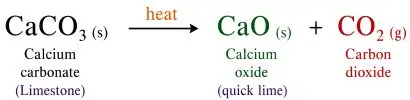
(b) Decomposition Reaction: A reaction in which a compound breaks up on heating into two or more simpler substances is called a decomposition reaction.
Examples:
Calcium carbonate decomposes on strong heating to form two compounds, calcium oxide and carbon dioxide.
(c) Displacement Reaction: A reaction in which a more active element displaces a less active element from a compound is called a displacement reaction.
Examples:
Zinc is more reactive than copper so it displaces copper from copper sulphate solution to form zinc sulphate.
Zn (s) + CuSO4 (aq) ⟶ ZnSO4 (aq) + Cu (s)
(d) Double Displacement Reaction: A chemical reaction in which two compounds in their aqueous state exchange their ions or radicals to form new compounds is called a double decomposition reaction.
AB + CD ⟶ CB + AD
Examples:
When a solution of silver nitrate is added to a solution of sodium chloride a precipitate of silver chloride is formed.
AgNO3 (aq) + NaCl (aq) ⟶ NaNO3 (aq) + AgCl ↓
Question 2
What are oxides? Give two examples of each of the following oxides:
(a) Basic oxide
(b) Acidic oxide
(c) Amphoteric oxide
(d) Neutral oxide
Answer:
Oxides are compounds of oxygen with other elements.
(a) Basic oxide: Calcium oxide (CaO) and magnesium oxide (MgO)
(b) Acidic oxide: Carbon dioxide (CO2) and sulphur dioxide (SO2)
(c) Amphoteric oxide: Zinc oxide (ZnO) and aluminium oxide (Al2O3)
(d) Neutral oxide: Carbon monoxide (CO) and nitric oxide (NO)
Question 3
Define exothermic and endothermic reactions. Give two examples of each.
Answer:
Exothermic Reaction
A chemical reaction in which heat is released is called an exothermic reaction.
Examples:
(i) When carbon burns in oxygen, carbon dioxide is formed and a lot of heat is produced.
C + O2 ⟶ CO2 + Heat
(ii) When water is added to quicklime, slaked lime is formed and along with it a large amount of heat energy is produced.
CaO + H2O ⟶ Ca(OH)2 + Heat
Endothermic Reaction
A chemical reaction in which heat is absorbed is called an endothermic reaction.
Examples:
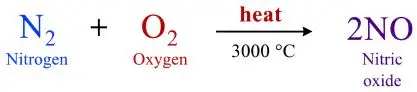
(i) When nitrogen and oxygen gas are heated together to a temperature of about 3000°C, nitric oxide gas is formed.
(ii) When calcium carbonate is heated at 1000°C, it decomposes to give calcium oxide and carbon dioxide.
Question 4
How will you obtain?
(a) Magnesium oxide from magnesium
(b) Silver chloride from silver nitrate
(c) Nitrogen dioxide from lead nitrate
(d) Zinc chloride from zinc
(e) Ammonia from nitrogen
Also give balanced equations for the reactions.
Answer:
(a) When magnesium reacts with oxygen it produces magnesium oxide.
2Mg + O2 ⟶ 2MgO
(b) When silver nitrate reacts with hydrochloric acid silver chloride is formed.
AgNO3 (aq) + HCl ⟶ AgCl↓ + HNO3
(c) When lead nitrate is heated strongly, a reddish brown gas nitrogen dioxide is produced.
2Pb(NO3)2 \(\xrightarrow\triangle\) 2PbO + 4NO2 (g) + O2 (g)
(d) Zinc reacts with dilute HCl to produce zinc chloride.
Zn + 2HCl (dil.) ⟶ ZnCl2 + H2 (g)
(e) When nitrogen gas reacts with hydrogen gas in presence of finely divided iron as catalyst, subjected to pressure of 200-900 atm and temperature of about 450°C, ammonia gas is produced.
Question 5
(a) What is meant by metal activity series?
(b) A metal P was placed in a solution of silver nitrate. After sometime, silver was deposited on metal P and the solution turned blue.
(i) Which is more reactive: metal P or silver?
(ii) What kind of reaction is this?
(iii) Give an example of this type of reaction.
Answer:
(a) Metal activity series is a list of metals arranged in order of their reactivity from highest to lowest.
It helps us predict how a metal will react with water, acids, or salt solutions.
(b) (i) Metal P is more reactive than silver.
Because P displaced silver from its salt solution.
(ii) This is a displacement reaction.
(iii) Example:
Zn + CuSO4 ⟶ ZnSO4 + Cu
Question 6
Following is a list of metals:
Na, Zn, Fe, Ag, Pb, Hg, Cu
Answer the questions:
(a) Which of the above metals can displace all other metals from their salt solution?
(b) Name one of the above metals which cannot react with dilute acid to produce hydrogen gas.
(c) Name one of the above metals which reacts with oxygen upon heating to produce an amphoteric oxide.
(d) Arrange the above metals in decreasing order of their reactivity.
Answer:
(a) Sodium (Na)
Sodium is the most reactive metal in the list, so it can displace the others from their salt solutions.
(b) Silver (Ag)
Silver is less reactive than hydrogen and therefore does not react with dilute acids to produce hydrogen gas.
(c) Zinc (Zn)
Zinc forms an amphoteric oxide (ZnO) on heating.
(d) Decreasing reactivity:
Na > Zn > Fe > Pb > Cu > Hg > Ag
Question 7
Given below is a diagram showing a type of reaction between two compounds. Answer the questions:
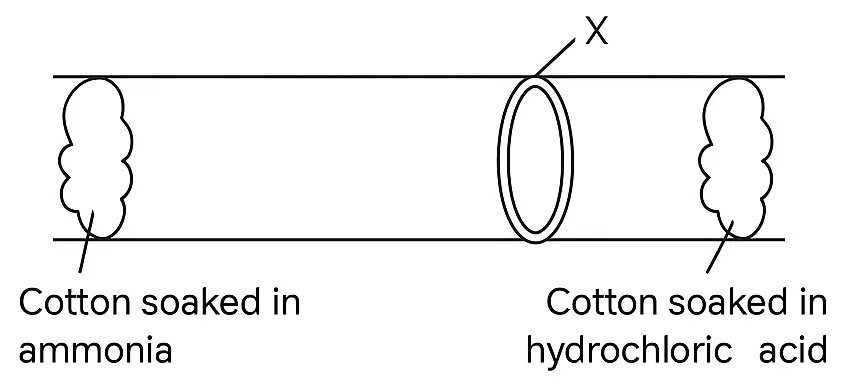
(a) What compound is X?
(b) Give a balanced chemical equation to form X.
(c) Name the type of reaction shown.
Answer:
(a) X is ammonium chloride (NH4Cl).
(b) NH3 (g) + HCl (g) ⟶ NH4Cl (g)
(c) Combination reaction
Download ICSE Class 8 Chemistry Chapter 6 Chemical Reactions Selina Solutions PDF
Students looking for complete ICSE Class 8 Chemistry Chapter 6 Chemical Reactions Selina Solutions PDF can use these notes for revision, homework, and exam preparation.
Practice all exercise questions regularly to score better marks in ICSE examinations.
Conclusion
ICSE Class 8 Chemistry Chapter 6 Chemical Reactions Selina Solutions covers the basics of chemical changes and reaction types. Students should practice equations, definitions, and reaction examples regularly to score well in examinations. Detailed solutions make revision easier and improve conceptual understanding.
ICSE Class 8 Chemistry Selina Solutions
The Selina Concise Chemistry Class 8 book includes the following chapters:
Official Website:
Students can visit the official CISCE website for more details and updates.