Introduction
ICSE Class 7 Chemistry Chapter 2 Physical and Chemical Changes Selina Solutions help students understand the difference between physical and chemical changes in an easy and exam-oriented manner. This chapter explains various types of changes occurring around us, such as melting of ice, burning of paper, rusting of iron, evaporation, boiling, and many more.
Students preparing for school examinations can use these solutions to revise concepts, practice questions, and improve their understanding of the chapter.
Study Support by Rohit Academy
Rohit Academy offers expert-curated ICSE Class 7 Chemistry Study Materials including ICSE Physical and Chemical Changes Selina Solutions, diagrams, and key formulas for better understanding.
You can also visit:
| ☛ ICSE Class 7 Chemistry Chapter 2: Physical and Chemical Changes Notes |
| ☛ ICSE Class 7 Physics |
| ☛ ICSE Class 7 Chemistry |
| ☛ ICSE Class 7 Mathematics |
| ☛ ICSE Class 7 Biology |
(A) Objective Type Questions
Question 1
Choose the correct answer from the multiple choices given below.
Question 1(i)
A substance which cannot sublime is:
(a) iodine (b) camphor
(c) sugar (d) dry ice
Answer:
(c) sugar
Explanation:
Sublimation is the process in which a substance changes directly from solid to gas without becoming liquid. Iodine, camphor, and dry ice sublime, but sugar melts and decomposes instead of subliming.
Question 1(ii)
When you put some ice cubes in a glass, droplets of water are formed on the outer wall of the glass. This explains the phenomenon of :
(a) melting
(b) freezing
(c) condensation
(d) evaporation
Answer:
(c) condensation
Explanation:
The cold surface of the glass cools the water vapour present in the air. The vapour changes into tiny droplets of water. This process is called condensation.
Question 1(iii)
Burning is a:
(a) slow process (b) fast process
(c) natural process (d) none of the above
Answer:
(b) fast process
Explanation:
Burning produces heat and light quickly, so it is a fast change.
Question 1(iv)
Which one of the following is volatile in nature?
(a) common salt (b) petrol
(c) water (d) milk
Answer:
(b) petrol
Explanation:
A volatile substance evaporates quickly at ordinary temperature. Petrol evaporates very fast, so it is volatile.
Question 1(v)
An example of both physical and chemical change is:
(a) burning of candle (b) melting of ice
(c) cooking of food (d) glowing of bulb
Answer:
(a) burning of candle
Explanation:
When a candle burns:
- Wax melts → physical change
- Wax burns and forms new substances like carbon dioxide and water vapour → chemical change
So, it is both a physical and chemical change.
Question 1(vi)
The compound rust is a hydrated oxide of:
(a) copper (b) aluminium
(c) iron (d) gold
Answer:
(c) iron
Explanation:
Rust is hydrated iron oxide formed when iron reacts with oxygen and moisture in air.
Question 1(vii)
When sugar is heated, its colour changes into :
(a) red (b) blue
(c) black (d) grey
Answer:
(c) black
Explanation:
On heating, sugar decomposes and forms black carbon, so its colour becomes black.
Question 1(viii)
A pop sound is heard when a lighted match stick is brought near the mouth of a jar. This indicates the release of:
(a) oxygen gas (b) hydrogen gas
(c) nitrogen gas (d) water vapour
Answer:
(b) hydrogen gas
Explanation:
Hydrogen gas burns with a characteristic “pop” sound when tested with a burning matchstick.
Question 1(ix)
When we add water to the following substances, which one will show a chemical change?
(a) salt
(b) sugar
(c) oil
(d) quick lime
Answer:
(d) quick lime
Explanation:
Quick lime reacts with water to form slaked lime and releases heat. Since a new substance is formed, it is a chemical change.
Assertion Reason Type
Question 2
The following questions are Assertion-Reason based questions. Choose the answer based on the codes given below.
Question 2(i)
Assertion (A): The dissolution of salt in water is a physical change.
Reason (R): Salt retains its composition and properties in solution.
(a) Both A and R are true and R is the correct explanation of A.
(b) Both A and R are true but R is not the correct explanation of A.
(c) A is true but R is false.
(d) A is false but R is true.
Answer:
(a) Both A and R are true and R is the correct explanation of A.
Explanation:
When salt dissolves in water, no new substance is formed. Salt can be recovered by evaporating the water, so it is a physical change. Salt keeps its chemical composition and properties in the solution.
Question 2(ii)
Assertion (A): Naphthalene balls disappear from the cupboard after sometime.
Reason (R): Naphthalene balls undergo evaporation.
(a) Both A and R are true and R is the correct explanation of A.
(b) Both A and R are true but R is not the correct explanation of A.
(c) A is true but R is false.
(d) A is false but R is true.
Answer:
(c) A is true but R is false.
Explanation:
Naphthalene balls disappear because they undergo sublimation, not evaporation. In sublimation, a solid changes directly into vapour without becoming liquid.
Question 2(iii)
Assertion (A): During a chemical change, new substances with entirely different properties are formed.
Reason (R): Bursting of a cracker is a chemical change.
(a) Both A and R are true and R is the correct explanation of A.
(b) Both A and R are true but R is not the correct explanation of A.
(c) A is true but R is false.
(d) A is false but R is true.
Answer:
(b) Both A and R are true but R is not the correct explanation of A.
Explanation:
Assertion is true because chemical changes produce new substances with different properties.
Bursting of a cracker is also a chemical change because heat, light, sound, and gases are produced. However, it is only an example and does not explain the assertion.
Question 2(iv)
Assertion (A): Heating of iron with sulphur is a physical change.
Reason (R): A new substance, iron sulphide is formed, when iron and sulphur are heated together.
(a) Both A and R are true and R is the correct explanation of A.
(b) Both A and R are true but R is not the correct explanation of A.
(c) A is true but R is false.
(d) A is false but R is true.
Answer:
(d) A is false but R is true.
Explanation:
Heating iron with sulphur is a chemical change because a new substance called iron sulphide is formed. Therefore, the assertion is false while the reason is true.
Fill in the blanks
Question 3
Fill in the blanks.
(a) A new substance is always formed in a ________ change.
(b) Melting of ice is a ________ change.
(c) When a candle burns, wax melts. Melting of wax is a ________ change.
(d) Chemical change occurs as a result of ________ between two substances.
(e) Burning of a fuel is a ________ change.
(f) Revolution of the earth around the sun is a ________ change.
(g) Growing of a seedling into a plant is a ________ change.
Answer:
(a) A new substance is always formed in a chemical change.
(b) Melting of ice is a physical change.
(c) When a candle burns, wax melts. Melting of wax is a physical change.
(d) Chemical change occurs as a result of reaction between two substances.
(e) Burning of a fuel is a chemical change.
(f) Revolution of the earth around the sun is a periodic change.
(g) Growing of a seedling into a plant is a chemical change.
True or False
Question 4
Write true or false against the following statements :
(a) Cutting of paper into pieces is a chemical change.
(b) Rusting of iron is a chemical change.
(c) Earthquake is a desirable change.
(d) Melting of ice is a physical change.
(e) Burning of sugar is a temporary change.
Answer:
(a) False
Correct Statement: Cutting of paper into pieces is a physical change.
(b) True
(c) False
Correct Statement: Earthquake is an undesirable change.
(d) True
(e) False
Correct Statement: Burning of sugar is a permanent chemical change.
Match the Columns
Question 5
Match the following.
| Column A | Column B |
| (a) Evaporation of water | (i) Non-periodic change |
| (b) Milk turning sour | (ii) Periodic change |
| (c) Earthquake | (iii) Chemical change |
| (d) Change of seasons | (iv) Physical change |
| (e) Glowing of bulb | (v) Reversible change |
Answer:
| Column A | Column B |
| (a) Evaporation of water | (iv) Physical change |
| (b) Milk turning sour | (iii) Chemical change |
| (c) Earthquake | (i) Non-periodic change |
| (d) Change of seasons | (ii) Periodic change |
| (e) Glowing of bulb | (v) Reversible change |
Question 6
State whether the following are physical or chemical changes.
(a) glowing of a bulb
(b) burning of sugar
(c) heating of water
(d) growing of a piglet into a pig
(e) burning of wood
(f) passing electric current through a heater
(g) water cycle in nature
(h) respiration in living beings
(i) shaping a piece of glass
(j) lightning
(k) dissolving sugar in water
(l) heating a mixture of iron filings and sulphur
(m) mixing oil with water
(n) cutting wood into small pieces
(o) photosynthesis
(p) Digestion of food
(q) Melting of wax
(r) Boiling of an egg
(s) Slaking of lime
Answer:
(a) glowing of a bulb — Physical change
(b) burning of sugar — Chemical change
(c) heating of water — Physical change
(d) growing of a piglet into a pig — Chemical change
(e) burning of wood — Chemical change
(f) passing electric current through a heater’s rod — Physical change
(g) water cycle in nature — Physical change
(h) respiration in living beings — Chemical change
(i) shaping a piece of glass — Physical change
(j) lightning — Chemical change
(k) dissolving sugar in water — Physical change
(l) heating a mixture of iron fillings and sulphur — Chemical change
(m) mixing oil with water — Physical change
(n) cutting wood into small pieces — Physical change
(o) photosynthesis — Chemical change
(p) Digestion of food — Chemical change
(q) Melting of wax — Physical change
(r) Boiling of an egg — Chemical change
(s) Slaking of lime — Chemical change
Question 7
Find the odd one out from the following :
(a) Burning of wood, cooking of food, glowing of bulb, formation of curd.
(b) Water turning into ice, cutting a glass into pieces, dissolving sugar into water, boiling an egg.
(c) Drying of clothes, ripening of fruits, photosynthesis, rusting of iron.
Answer:
(a) Glowing of bulb
Explanation:
Glowing of a bulb is a physical change, whereas burning of wood, cooking of food, and formation of curd are chemical changes.
(b) Boiling an egg
Explanation:
Boiling an egg is a chemical change, while the others are physical changes.
(c) Drying of clothes
Explanation: Drying of clothes is a physical change, whereas ripening of fruits, photosynthesis, and rusting of iron are chemical changes.
(B) Short Answer Type Questions
Question 1
Mention a change which is always
(a) desirable
(b) undesirable
(c) periodic
Answer:
(a) desirable — Cooking of food
(b) undesirable — Rusting of iron
(c) periodic — Change of day and night
Question 2
Name a chemical change which takes place in the presence of :
(a) Heat
(b) Light
(c) Electricity
Answer:
(a) Heat — Cooking of food
(b) Light —Photosynthesis
(c) Electricity — Electrolysis of water
Question 3
What do you observe when:
(a) water is boiled,
(b) a piece of paper is burnt,
(c) some ice cubes are kept in a glass tumbler,
(d) solid ammonium chloride is heated,
(e) an iron nail is kept in tap water for few days,
(f) a spoon of sugar is heated in a pan,
(g) a lighted match stick is brought near the mouth of the test tube containing hydrogen gas,
(h) quick lime is dissolved in water,
(i) little amount of curd is added to a bowl containing warm milk and kept for five hours?
Answer:
(a) Water changes into steam.
(b) Paper changes into ash and smoke is produced.
(c) Ice cubes melt into water.
(d) White vapours of ammonium chloride are formed.
(e) A reddish-brown layer of rust forms on the nail.
(f) Sugar melts and then turns brown or black.
(g) Hydrogen burns with a ‘pop’ sound.
(h) Heat is produced and slaked lime is formed.
(i) Milk changes into curd.
Question 4
Is burning a physical change or a chemical change? Why?
Answer:
Burning is a chemical change because new substances such as ash, smoke, and gases are formed and the change cannot be reversed.
(C) Long Answer Type Questions
Question 1
(a) Define:
(i) a physical change
(ii) a chemical change
(b) Give two examples for each of the above two changes.
Answer:
(a) Definition:
(i) Physical change: A physical change is a change in which no new substance is formed and the original substance can usually be obtained back.
(ii) Chemical change: A chemical change is a change in which one or more new substances are formed with different properties.
(b) Two examples for each:
(i) Physical changes:
- Melting of ice
- Cutting of paper
(ii) Chemical changes:
- Rusting of iron
- Burning of wood
Question 2
What are reversible and irreversible changes? Give one example of each.
Answer:
(i) Reversible change:
A change which can be reversed to obtain the original substance is called a reversible change.
Example : Melting of ice.
(ii) Irreversible change:
A change which cannot be reversed to obtain the original substance is called an irreversible change.
Example : Burning of paper.
Question 3
A burning candle shows both physical and chemical changes. Explain.
Answer:
When a candle burns, the wax near the flame melts. This is a physical change because no new substance is formed and the wax can solidify again on cooling.
At the same time, the wax vapours burn and produce carbon dioxide, water vapour, heat, and light. This is a chemical change because new substances are formed.
Question 4
State three differences between evaporation and boiling.
Answer:
| Evaporation | Boiling |
| Takes place at all temperatures | Takes place only at a fixed temperature |
| Occurs only from the surface of the liquid | Occurs throughout the liquid |
| Slow process | Fast process |
Question 5
State four differences between physical and chemical changes.
Answer:
Question 6
Give reasons:
(a) Burning is a chemical change.
(b) Cutting of a mango into pieces is a physical change.
(c) Rusting of iron is an undesirable change.
Answer:
(a) Burning is a chemical change because new substances such as ash and gases are formed.
(b) Cutting of a mango is a physical change because no new substance is formed.
(c) Rusting damages iron objects and makes them weak, therefore it is undesirable.
Question 7
The diagram given ahead shows an experiment in which a few pieces of quicklime are added to water.
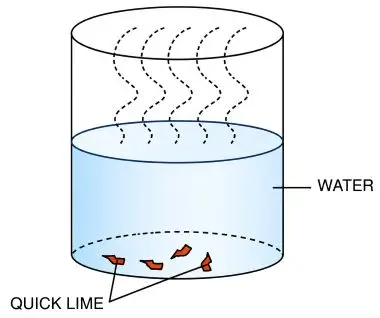
(a) What do you observe when quicklime is added to water?
(b) Why does the beaker become hot?
(c) What type of change is depicted here?
(d) What conclusion can be drawn on the basis of your observation?
Answer:
(a) Heat is produced, the beaker becomes hot, and slaked lime is formed.
(b) The beaker becomes hot because heat is released during the reaction.
(c) It is a chemical change.
(d) Chemical changes may release heat energy.
Question 8
(a) Draw a well-labelled diagram to show the process of sublimation.
(b) Is sublimation a physical change or a chemical change? Explain.
(c) Name two substances which can sublime.
Answer:
(a)
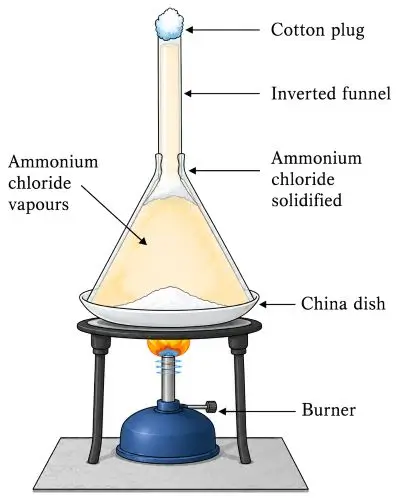
(b) Sublimation is a physical change because no new substance is formed and the substance can be obtained back by cooling.
(c) Camphor and ammonium chloride can sublime.
Question 9
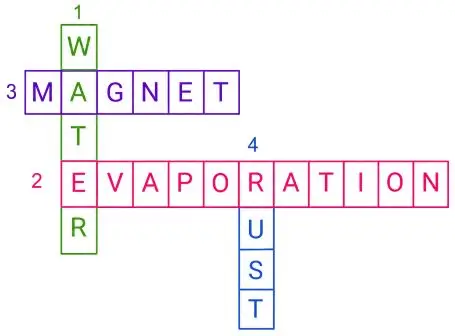
Solve the crossword puzzle given below with the help of the following clues:
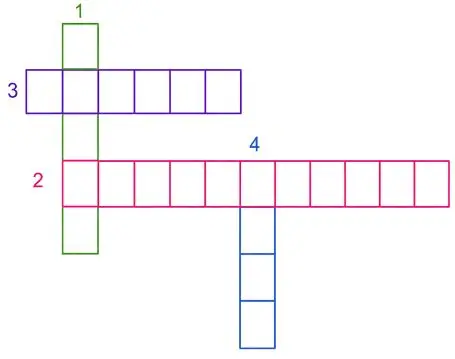
Down:
1. A large amount of energy is given out when quicklime is added to this substance.
4. A reddish-brown substance formed when iron is exposed to moist air.
Across:
2. It is a physical change in which a liquid changes into vapour.
3. An object which attracts iron fillings.
Answer:
The solved crossword puzzle is given below:
(D) Case Study
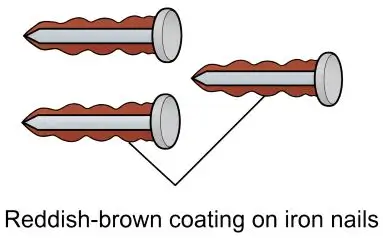
Ravi had brought some iron nails to fix pictures on the walls of his room. However, he got busy and he left those nails in the courtyard of his house to work with them later. Upon returning after a few days, he observed a reddish-brown substance formed on the nails. His father told him that this is a common phenomenon on iron articles, especially during rainy season.
(a) Name the reddish-brown substance formed on the iron nails.
(b) Is it a physical change ? Justify your answer.
(c) What will you observe when a magnet is brought near the nails ?
(d) State two conditions under which the above phenomenon takes place. Why is this faster during rainy season?
Answer:
(a) The reddish-brown substance formed on the iron nails is rust.
(b) No, it is not a physical change. It is a chemical change because a new substance called rust is formed and the change cannot be reversed easily.
(c) The iron nails will be attracted towards the magnet.
(d) Conditions required for rusting:
- Presence of air (oxygen)
- Presence of moisture (water)
Rusting is faster during the rainy season because the air contains more moisture.
Download ICSE Class 7 Chemistry Chapter 2 Physical and Chemical Changes Selina Solutions PDF
Students looking for complete ICSE Class 7 Chemistry Chapter 2 Physical and Chemical Changes Selina Solutions PDF can use these notes for revision, homework, and exam preparation.
Practice all exercise questions regularly to score better marks in ICSE examinations.
Conclusion
ICSE Class 7 Chemistry Chapter 2 Physical and Chemical Changes Selina Solutions provide detailed explanations of physical changes, chemical changes, reversible and irreversible changes, evaporation, boiling, and important textbook questions. These solutions are useful for students preparing for class tests, homework, and final examinations.
ICSE Class 7 Chemistry Selina Solutions
The Selina Concise Chemistry Class 7 book includes the following chapters:
| ☛ ICSE Class 7 Chemistry Chapter 1: Matter and Its Composition Selina Solutions |
| ☛ ICSE Class 7 Chemistry Chapter 2: Physical and Chemical Changes Selina Solutions |
| ☛ ICSE Class 7 Chemistry Chapter 3: Elements, Compounds and Mixtures Selina Solutions |
| ☛ ICSE Class 7 Chemistry Chapter 4: Atomic Structure Selina Solutions |
| ☛ ICSE Class 7 Chemistry Chapter 5: Language of Chemistry Selina Solutions |
| ☛ ICSE Class 7 Chemistry Chapter 6: Metals and Non-metals Transfer Selina Solutions |
| ☛ ICSE Class 7 Chemistry Chapter 7: Air and Atmosphere Selina Solutions |
Official Website:
Students can visit the official CISCE website for more details and updates.